

Every day, we get blasted through all kinds of channels by how we’re not good enough. In soft ways, like “You’ll feel better if you buy this product,” to harder ways, like the huberman-ferris-attia archetype guys (“nerd-alert,” my daughter’s words, lol) that tell you how to improve all the little details in your life, from dopamine receptors to sleep cycles to, I kid you not, how many minutes of sunlight you need per day. So that you will finally feel happier, be healthier, and be more successful, etc.1
And then there are the self-inflicted moments of not feeling good enough and wanting to improve yourself, maybe by watching “motivational” videos. I had my periods watching that stuff in my early twenties. “Fulfill your potential,” “pain is temporary,” yadayada. Anyway, it’s all with the intent of improving (because you don’t feel good enough).
And yes, improvement has brought us much—new technology has saved both my life and that of my daughter, for example—and it isn’t a bad thing to improve yourself either, per se. It is better to feel healthier and happier than not, and all that. But when improvement at all costs—or even more sadly, consuming “content” about improving yourself without doing anything—is what society is mainly busy with, we lose the whimsy and fun that life inherently provides. We lose the actual happiness we try to achieve by “improving ourselves.”
So instead of improving, I say we’d better start improv-ing.
You know, improv, the term used for on-the-spot playing with whatever is in front of you, especially in theater (coming from the full word improvisation). Or, as I see it, dancing with reality as it presents itself, where you don’t try to improve it, but play with it, move with it, improvise with it.
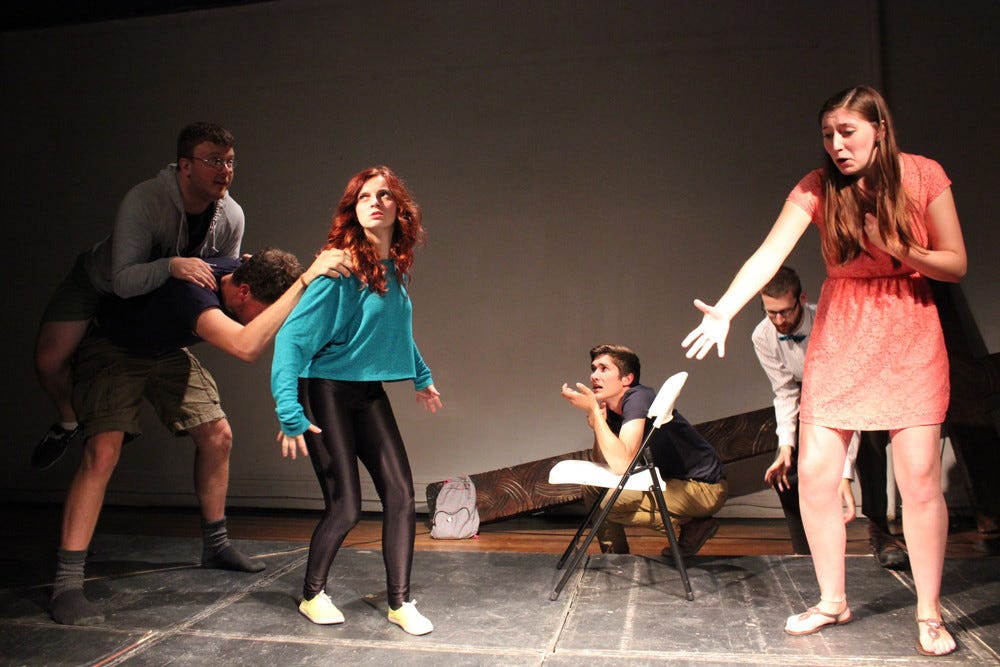

One of the key ways that improv works, and keeps working, is by saying “Yes, and…” In an actual improv session, when someone says, “Do you want a cup of coffee?” you don’t say, “No, I don’t like coffee.“ Because that way, you stop the game of improv (or at least make it harder to play). Instead, see the question of wanting coffee as an invitation. You might say, “Yes, please, with some milk.” Or, if you want to keep closer to the actual truth of not wanting coffee, improv around it and say, “I normally like coffee, but I’m trying to lower my caffeine, do you have tea, maybe, or decaf?” This invites the other player(s) to play in turn because you added something to the game.
Life can be like that amazing improvisation game, and is an amazing improv partner; it’s always willing to play.2 But instead, a large part of society and culture focuses on improvement all the time,3 which is so goal- or outcome-focused that you miss the invitations from the world around you to come out and play.
So here’s an exercise for you:
Next time you come across something that you want to change or make better, ask yourself, “How can I play with this? How can I say ‘Yes, and…’ to this situation, instead of trying to improve it?” I bet you’ll get funny, even peaceful (because you’ll accept life more), and unexpected results out of your dance with life!
Cheers,
Jibran
IMO their whole schtick is built upon a coping mechanism to manage their own (past) low sense of self-worth through using their intellectual prowess—hence so many nerds, my past self included, get attracted to the type of stuff they put out. Which isn’t all bad, but is bad if it’s taken too seriously.
Realizing life is a partner to play with and is always available, like a friend who always wants to play, has truly made me grateful for this very day.
Side note: this constant improvement is also what’s wrong about much of the AI slop out there. i.e., AI is getting better and better at giving “perfect” outputs, but it’s not whimsical, fun, playful, or random at all. I actually liked the outputs from 3 years ago much more, especially from image models, because it was a kind of roll of the dice about what would come out. Messing around with image generators felt like play. But even a year later, it was already lame, emulating human illustrations without the creative spark.